
Case study · WordPress + technical SEO
A dental implant practice in a large US metro needed its website to become the main source of new patient enquiries. Through 2023 and 2024 I rebuilt the site in WordPress and ran the technical SEO behind it. This is what changed and why it worked.
The practice’s name, design, and screenshots are withheld under my agreement with the agency I built it through. Traffic figures on this page are third-party estimates from Ahrefs.
project_spec
Confidential
Client
Dental implant practice, United States. Name withheld.
Role
WordPress developer and technical SEO, through my US agency partner
Platform
WordPress, Elementor Pro, GA4, Search Console
Period
2023 to 2024
Services
Rebuild, service and location pages, schema, performance, conversion tracking
organic_traffic · estimated monthly visits · US
Ahrefs estimate
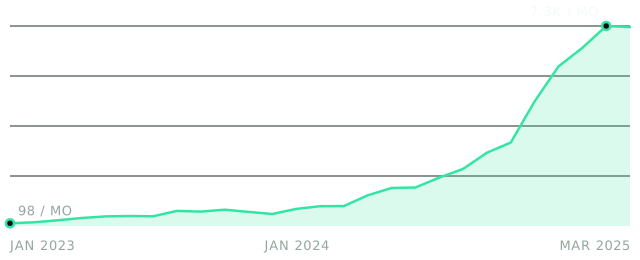
Organic visits, Jan 2023 to Feb 2025
Estimated visits per month at peak
Equivalent paid search value per month
Service and location pages ranking
01 · Overview
The client is an established dental implant practice with a long list of procedures: single and multiple implants, full-arch restorations, extractions, and the cosmetic and restorative work around them. Patients travel from across the metro and beyond, and an implant case is a large decision that people research for weeks before they call.
When the project started, the website was not built for any of that. A handful of pages, one generic services page, no coverage of the surrounding communities, and templates heavy enough to fail Core Web Vitals on mobile. Organic search brought a few dozen visits a month. Paid ads carried almost all of the new patient enquiries, which is an expensive way to run a practice.
The brief from the agency was simple: make the website the practice’s main source of enquiries, and make it something the front desk could keep updating without a developer.
02 · Challenge
03 · Approach
I rebuilt the site around a hub-and-spoke architecture. Every procedure got its own page, more than twenty in total, each following the same template: who it is for, what it costs, how the procedure works, recovery, and a FAQ block written from the questions the front desk actually hears. A Cost and Financing hub sits above them, because price is the first thing most patients search for.
Rather than ten copies of the same page with a city name swapped, each location page covers directions, travel time, the procedures most requested from that area, and local reviews. Ten surrounding communities were covered in the first phase.
Clean URLs, a deliberate internal linking pattern from hubs to spokes and back, XML sitemaps trimmed to pages that should rank, and structured data generated from the templates: Dentist and LocalBusiness for the practice, Service for each procedure, FAQ for the question blocks. Schema lives in the template, so a new procedure page gets it automatically.
Elementor can be fast if you are strict with it. I set up an image pipeline that serves correctly sized WebP files, removed the plugins that were loading scripts on every page, deferred everything that was not needed for the first paint, and put the site behind a CDN with full-page caching. Mobile passed all three Core Web Vitals after the rebuild.
An implant eligibility quiz became the main call to action, with a consultation offer beside it and a short form on every service page. Phone numbers are click-to-call on mobile. GA4 records calls, form submissions, and quiz completions as events, so the practice can see which pages produce enquiries rather than visits alone.
Procedure pages, blog posts, and glossary entries are Elementor templates with clearly named fields. The office manager has added pages since launch without touching a developer, which is the only test of a handover that matters.
04 · Results
The chart at the top of this page shows Ahrefs’ estimate of monthly organic visits from the United States between January 2023 and March 2025: the two years of the engagement and the months after handover, when the pages kept climbing on their own. The estimate went from under 100 visits a month to more than 7,300, roughly a 75 times increase, and the equivalent paid search value of that traffic reached about $11,500 per month. More than thirty service and location pages rank for their target terms.
Third-party estimates are conservative for local practices because they miss branded and long-tail searches, so the practice’s own analytics ran higher than the figures here.
Organic visits
Jan 2023 to Feb 2025, Ahrefs
Visits per month
Peak estimate, Feb 2025
Paid value per month
What the same clicks would cost in ads
Core Web Vitals
Passing on mobile after rebuild
05 · Takeaways
Organic growth like this is not a trick. It is a site with the right pages, in the right structure, that loads fast and answers the question the patient actually typed.Md Shahin Khan
Tell me what you are building and where it is stuck. I read every message and usually reply within a few hours.
Free 30-minute call · Written plan included · 30 days of fixes after launch