Estate planning attorney marketing works when it closes the gap between “I should do this” and “I booked it”. Most adults know they need a will and keep putting it off, so the firms that win are the ones people find easily, understand quickly and trust at the moment a life event pushes them to act. In practice that means a page for each service, published fees, a strong Google Business Profile with reviews, workshops or webinars, a few good referral partners, and steady email follow-up for the people who are not ready yet.
My guides to SEO for lawyers and local SEO for lawyers cover the foundations every firm needs. Estate planning has its own shape: the work is rarely urgent, clients are often older or are adult children helping a parent, and the decision can take months. This guide covers what estate planning clients actually search for, with numbers, and how a small firm turns that slow-moving demand into signed engagements.
What Estate Planning Clients Search For
Here are US monthly searches for common estate planning terms, from Ahrefs data I pulled for this article:
| Search | US searches a month | Difficulty (0 to 100) |
|---|---|---|
| estate planning attorney near me | 17,000 | 32 |
| trust attorney near me | 6,800 | 4 |
| elder law attorney near me | 5,300 | 19 |
| probate lawyer near me | 3,100 | 0 |
| will attorney near me | 2,800 | 6 |
| how much does a will cost | 2,300 | 0 |
| living trust attorney near me | 2,300 | 31 |
| how much does a trust cost | 1,700 | 0 |
| power of attorney lawyer near me | 350 | 0 |
Two patterns matter. People search for the document or the situation (a trust, a will, probate, power of attorney) more than for “estate planning”. And price questions are large and uncontested: “how much does a will cost” and “how much does a trust cost” together draw about 4,000 searches a month with a difficulty of 0. A firm that answers those questions honestly, on its own site, is meeting people right at the start of their decision.
Why Estate Planning Marketing Is Different
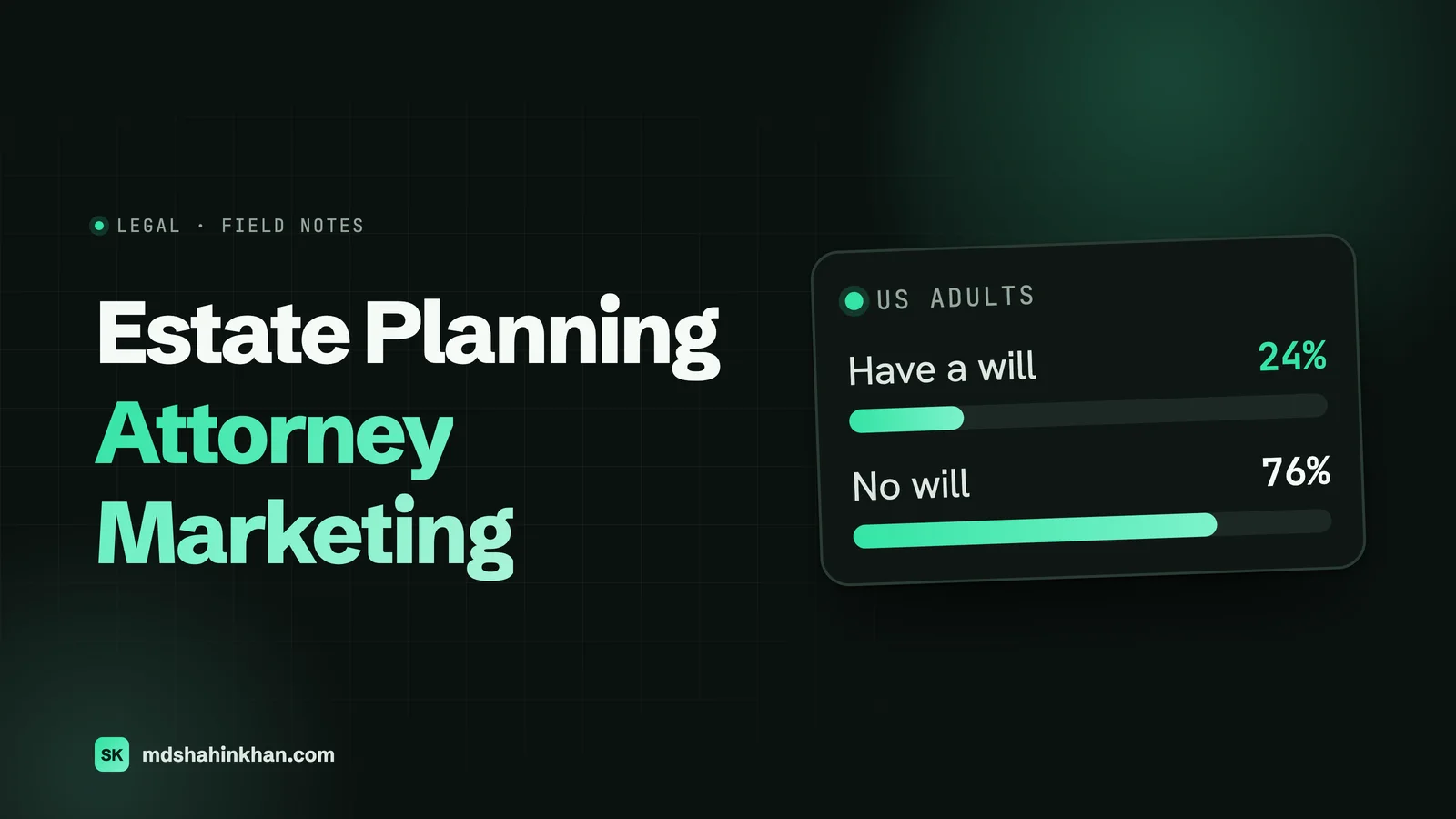
Most people put it off. In Caring.com’s 2025 Wills and Estate Planning Study, run with YouGov, only 24% of US adults said they had a will, down from 33% in 2022. Gallup’s polling puts the figure higher, but either way most adults do not have a plan. Your marketing is not competing with other firms first; it is competing with procrastination.
Life events make people act. A new baby, a marriage or divorce, buying a house, a diagnosis, a parent’s decline or death, retirement, selling a business. Marketing that speaks to those moments (“Just had a baby? Here is what to put in place”) converts better than general reminders.
Two audiences search. Older adults planning for themselves, and adult children helping a parent or dealing with a parent’s estate. Your pages should speak to both, clearly and without jargon.
The decision is slow. Many people read, watch and compare for weeks or months before booking. That is why email follow-up and workshops matter more here than in urgent practice areas like personal injury or criminal defense.
The Pages Your Website Needs
Give each service its own page, written for the person searching:
- Wills
- Revocable living trusts
- Powers of attorney and healthcare directives
- Probate, with the steps in your state
- Trust administration for families after a death
- Elder law and long-term care planning, if you offer them
- Planning for blended families, business owners and special needs, if those are your specialties
Each page should explain who it is for, what the document does, what happens if you do nothing, how the process works with your firm (meetings, signing, timeline), what it costs, and how to book. Use plain language and readable type; many of your readers are older, and many are reading on a phone in a stressful week. My article on law firm website design covers the design side.
Publish Your Fees
Many estate planning firms charge flat fees for common packages, and price is one of the most searched questions in this field. A fees page that shows your packages or ranges does several things at once:
- It answers “how much does a will cost” and “how much does a trust cost” for people in your area, which can rank.
- It reassures people who assume a lawyer will be unaffordable, many of whom are the ones putting it off.
- It filters out enquiries that are not a fit before they take your time.
Show what each package includes (documents, meetings, funding the trust, updates), what is extra, and whether the first consultation is free. Your state bar’s advertising rules apply to any fee you publish, so keep it accurate and current.
Google Business Profile and Reviews
The map pack decides most “near me” searches: “estate planning attorney near me”, “trust attorney near me” and “will attorney near me” alone add up to more than 26,000 searches a month. My guide to local SEO for lawyers covers the profile step by step. For estate planning:
- Primary category: “Estate planning attorney”, with your other genuine practice areas as secondary categories.
- Services: list wills, trusts, powers of attorney, probate and trust administration separately.
- Reviews: families who have just been through a calm, well-handled planning process are often glad to say so. Ask every client when the plan is signed, with a direct link, and reply without mentioning any details of their plan. Google’s rules forbid offering anything for a review, and your state bar’s rules apply on top.
Workshops and Webinars
Workshops are a classic estate planning channel for a reason: they let people learn without commitment, meet the attorney, and ask the questions they were embarrassed to ask. “Estate planning workshop” and “estate planning seminars” are searched about 350 times a month in the US, mostly by people looking for one near them.
- Pick one clear topic per session: “Wills vs trusts in [state]”, “What happens if you die without a will”, “Planning for a parent with dementia”.
- Partner with a venue that already has the audience: libraries, community centers, churches, retirement communities, employers’ benefits programs.
- Offer an online version for adult children who live elsewhere and cannot attend in person.
- Teach, do not sell. End with a simple next step (a consultation or a planning checklist), and let people choose.
- Follow up by permission only. Ask attendees to opt in to an email or a call. Bar rules on in-person solicitation (ABA Model Rule 7.3 and your state’s version) apply to how you follow up, so check them.
Record the online version, cut it into short clips, and use them on your site and social channels.
Referral Partners
Estate planning referrals come from professionals who see clients at the moments that trigger planning: financial advisors, CPAs, insurance agents, family and divorce lawyers, elder care managers and real estate agents.
- Pick three to five partners whose clients match yours, rather than collecting dozens of business cards.
- Make referring easy: a one-page summary of what you do and your fees, a direct line, and a promise to keep the partner informed when the client agrees.
- Give value back: joint workshops for their clients, short explainers they can share, quick answers when their clients have questions.
- Follow the ethics rules. ABA Model Rule 7.2(b) generally bars giving anything of value for a recommendation, but allows reciprocal referral arrangements with other professionals if they are not exclusive and clients are told about them. Your state has its own version, so check it before formalizing anything.
Email and the Long Follow-Up
Because many people take months to decide, the firms that keep in touch win clients that others lose.
- Offer something useful in exchange for an email address: a planning checklist, a “what to gather before your first meeting” guide, a state-specific probate overview.
- Send a short, useful email every month: one question answered, one life event explained, one reminder that plans need updating.
- Remind existing clients to review their plans every few years or after life changes; it brings repeat work and referrals.
- Make unsubscribing easy and never share the list.
Content That Brings Clients
Answer the questions people ask before they are ready to call. Good topics include:
- The cost questions above, for your state.
- “What happens if you die without a will in [state]?”
- Wills versus trusts, explained plainly.
- The common mistakes people make with estate plans (outdated beneficiaries, unfunded trusts, no healthcare directive). People search for exactly that.
- Probate step by step, for families going through it.
- What to do after a parent dies: a checklist for adult children.
Date every article and update it when laws or thresholds change; AI assistants favour current pages, and readers trust them more. Short videos of the attorney answering one question each are worth recording too, because video is one of the sources Google’s AI answers cite most.
Paid Search
Paid search works best on the high-intent searches: “probate lawyer near me”, “trust attorney near me”, “will attorney near me”. Send each ad group to the matching service page, track calls and booked consultations rather than clicks, and run ads during the hours your phones are answered. Google’s Local Services Ads, with their “Google Screened” badge and pay-per-lead pricing, are worth testing alongside regular search ads. My law firm marketing plan shows how to budget across channels.
Measuring What Works
- Ask every new client how they found you, and record it.
- Track calls, form submissions and workshop sign-ups by source (Google Business Profile, website pages, ads, partners).
- Count consultations and signed engagements per channel each month, not just leads.
- Watch the long tail: a workshop attendee or an email subscriber may sign six months later, so look back over the year, not just the month.
What It Costs
A 2026 local SEO pricing guide from SEO.com puts agency retainers at $501 to $3,000 a month and one-off projects at $500 to $5,000. Full law firm SEO retainers commonly run $2,000 to $5,000 a month (sources in my SEO for lawyers guide). For a small estate planning firm, most of the work is one-off (service pages, a fees page, the Google profile, a lead magnet) or in-house (reviews, workshops, partner relationships, a monthly email), so a retainer is optional until the basics are in place.
A 90-Day Plan for a Small Estate Planning Firm
Month 1: the website and profile
- Build a page for each service you want more of: wills, trusts, powers of attorney, probate, trust administration.
- Publish a fees page with your packages or ranges and what each includes.
- Complete the Google Business Profile with “Estate planning attorney” as the primary category and every service listed.
- Start asking every client for a review when their plan is signed.
Month 2: follow-up
- Create one useful download (a planning checklist) and an email sign-up on every service page.
- Send the first monthly email.
- List five potential referral partners and meet two.
Month 3: reach
- Run one workshop, in person or online, and record it.
- Publish two articles answering common questions for your state.
- Test a small, tracked ad campaign for one high-intent search.
- Review where every new client came from.
If you want help with the website side, my page on websites for law firms shows what I build, and my local SEO guide for small businesses covers the map pack in more depth. For a practice area with a very different client journey, compare my guide to immigration lawyer marketing.
Frequently Asked Questions
How Do Estate Planning Attorneys Get Clients?
Mostly through Google searches for services near them (wills, trusts, probate), referrals from financial advisors, CPAs and past clients, and workshops or webinars. A website with a page for each service and published fees, a strong Google Business Profile with reviews, and email follow-up for people who are not ready yet turn those sources into booked consultations.
What Is the 80/20 Rule for Lawyers?
In marketing terms, the small share of work that brings most of the results. For an estate planning firm, that is usually a clear page for each service, a published fees page, a Google Business Profile with steady reviews, and a few referral partners who see clients at life events. Most other tactics add much less.
Should Estate Planning Attorneys Publish Their Fees?
Usually yes. Questions like “how much does a will cost” and “how much does a trust cost” are searched thousands of times a month in the US. Many estate planning firms charge flat fees, so publishing packages or ranges answers a real question, reassures people who assume a lawyer is unaffordable, and filters out enquiries that are not a fit. Keep the fees accurate and within your state bar’s advertising rules.
Do Estate Planning Seminars Still Work?
Yes, when they teach rather than sell. A focused topic, a venue that already has the right audience (libraries, community centers, retirement communities, employers) and an online version for adult children who live elsewhere bring in people who are close to acting. Follow up only with attendees who opt in, and check your state’s rules on solicitation.
How Can Estate Planning Attorneys Work With Financial Advisors?
Choose a few advisors whose clients match yours, give them a simple summary of your services and fees, keep them informed when clients agree, and offer joint workshops or explainers for their clients. ABA Model Rule 7.2(b) generally bars paying for referrals but allows non-exclusive reciprocal referral arrangements when clients are told about them; check your state’s version first.
What Should an Estate Planning Law Firm Blog About?
The questions people ask before they are ready to call: what a will or trust costs in your state, what happens if someone dies without a will, wills versus trusts, the common mistakes people make with estate plans, probate step by step, and what to do after a parent dies. Date each article and update it when laws or thresholds change.
If you run an estate planning practice and want to know what your website and profile should change first, book a free 30-minute call and I will look at them with you, whether or not we work together.